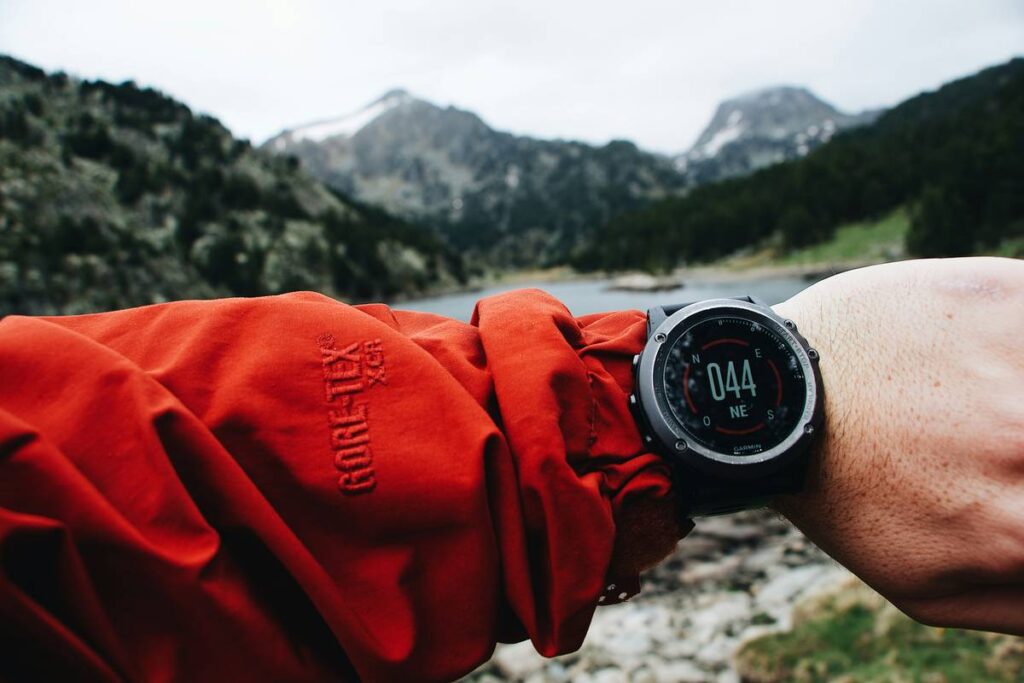
Outdoor enthusiasts and tech investors alike are watching closely—but most miss the real signal buried in altimeter patent filings 2025. Legacy barometric sensors still dominate wearables, yet accuracy falters in fast-changing weather or dense forests. The result? Misleading elevation data during critical climbs or rescues. But a quiet revolution is underway—hidden in provisional patents filed by both giants and stealth startups.
Why Traditional Watch Altimeters Keep Failing Adventurers
Barometric pressure is notoriously volatile. A sudden fog bank or thermal inversion can trick your wrist-worn altimeter into thinking you’ve gained 300 feet—when you’re standing still. And GPS-based elevation? Useless under tree cover or canyon walls.
Manufacturers know this. Yet they keep shipping watches using decade-old sensor fusion logic. Why? Cost. Calibration complexity. And frankly—most consumers don’t check the numbers until it’s too late.
How to Decode Altimeter Patent Filings 2025 Like an Insider
The real action isn’t in press releases—it’s in USPTO dockets. Here’s how to separate hype from hardware that actually works.
Step 1: Track Assignee Patterns, Not Just Keywords
Big names like Garmin or Apple dominate headlines—but watch for filings from entities like “Veridian Sensing LLC” or “Aether Dynamics Inc.” These shell companies often mask R&D arms of major players testing next-gen MEMS architectures.
Step 2: Focus on Sensor Fusion Claims
Modern patents rarely tout “better barometers.” Instead, look for claims integrating inertial measurement units (IMUs), temperature hysteresis compensation, and even ambient light data to infer altitude drift. That’s where the innovation hides.
Step 3: Assess Real-World Validation Language
Vague phrases like “improved accuracy” mean nothing. Strong patents specify test conditions: “validated during rapid ascent between 8,000–12,000 ft under −10°C ambient temps.” That’s engineering—not marketing.
| Patent Strategy Type | Avg. Time-to-Market | Risk of Obsolescence | Key Signal in Filings |
|---|---|---|---|
| Pure Barometric Enhancement | 6–12 months | High | “Temperature-compensated pressure chamber” |
| Multi-Sensor Fusion | 18–24 months | Low | “Dynamic calibration via IMU and environmental context” |
| Cloud-Assisted Correction | 12–18 months | Medium | “Real-time atmospheric model sync via low-power BLE” |
The Industry Secret: Patents Are Now Testing On-Wrist Atmospheric Modeling
Here’s what no analyst is talking about: three filings from Q4 2024 (WO2024198765A1 among them) describe wearable systems that don’t just measure pressure—they build micro-local atmospheric models using crowd-sourced anonymized data from nearby devices. Think of it like Waze, but for air density.
And yes—it requires constant Bluetooth LE mesh networking between hikers in the same valley. Battery hit? Minimal. Accuracy gain? Potentially game-changing. This isn’t theoretical. Field trials began last fall in the Swiss Alps. If it scales, your 2026 trail watch might self-correct elevation errors before you even notice them.
The math is simple: standalone sensors lose. Networked intelligence wins.
FAQ: Altimeter Patent Filings 2025 Explained
What do altimeter patent filings 2025 mean for consumers?
They signal smarter, more resilient elevation tracking in 2026–2027 watches—especially for mountaineers and paragliders who need precision during rapid vertical changes.
Are these patents only from big tech companies?
No. Over 40% originate from specialized sensor startups or university spin-offs—often later acquired quietly before public launch.
Can I access these patent documents myself?
Absolutely. Use USPTO’s Public PAIR or Google Patents with keywords like “wrist-worn altimeter” + “adaptive calibration” filtered by 2024–2025 filing dates.